How long will concrete lifting foam last?
Lifting foam does not break down in the ground, so a foam-lifted slab usually stays level until the soil beneath it moves again, often for as long as the concrete itself lasts.
Homeowners in Sandy Springs often ask this before they let anyone drill holes in a driveway or patio. The foam is rarely what fails. The ground under it and the water moving through that ground decide how long the repair holds.
The plain answer
Concrete lifting foam is a two-part polyurethane. It goes into the void under a sunken slab as a liquid through holes about the size of a coin. It then expands, hardens and pushes the concrete back up. Once cured, it does not absorb water, rot or wash out the way loose fill can. It also weighs very little, so it adds almost no new load to soil that is already struggling.
That means the foam itself is usually not the weak link. If a lifted slab drops again, the cause is almost always below the foam: soil that keeps settling, water that keeps carving out a channel, or a slab that was cracked into loose pieces before anyone lifted it. When the conditions that caused the sinking are dealt with, a foam repair can last as long as the slab does. When they are ignored, the slab can settle again whatever it was lifted with.
What changes the answer on a real property
Water is the biggest factor. Most sunken walkways and driveway panels around Sandy Springs sit near a downspout, a low corner of the yard or the edge of a slope. Georgia red clay holds water, swells when wet and shrinks during a dry spell. Heavy summer storms can push a lot of water across a lot in a short time. If a downspout empties right beside a slab, the soil under that slab keeps changing, and so the foam is sitting on ground that is moving.
The soil under the foam matters too. Many homes here were built on lots that were cut and filled to make them level. Fill that was not compacted well can keep settling for years. Foam lifts the slab and fills the existing gap, but it cannot firm up soft soil several feet down. If the fill is still settling, the slab can drift down slowly along with it.
Tree roots are another common cause in neighbourhoods with mature oaks and poplars. Roots can lift one edge of a sidewalk and dry out the soil under the other. Lifting a panel that is being pushed by a root, or settling because a big tree is pulling moisture out of the clay, tends to give a shorter result.
Finally, the state of the slab itself. A panel that is cracked straight through into several loose pieces can be lifted, but each piece moves on its own. A slab that is badly broken up or crumbling at the surface may be better replaced than lifted.
What you can check yourself
Before you call anyone, walk the area after a good rain. You are looking for the reason the slab sank, because that reason will still be there after the slab is lifted.
Look at where the downspouts empty. If one discharges within a few feet of the sunken section, that is a likely cause. An extension or a buried drain line that carries water away is a cheap change that helps any repair hold.
Check the joints between slabs and the gap where a patio or walkway meets the house. Open joints let water get under the concrete. Wide gaps along the foundation can also send water toward the basement or crawl space.
Look for washout at the edges. If you can see soil missing from beneath the edge of a driveway or sidewalk, or you can slide your fingers under it, water is moving material out from below.
Note any trees nearby and whether the high side or the low side of the slab is closer to them. Take a few photos with a level or a straight board laid across the problem. Those photos help a contractor see the problem even before the visit.
When it needs a professional
A small trip edge on a walkway is a nuisance. Some situations are worth a proper look sooner. Call someone if a slab next to the house has dropped and now slopes toward the foundation. Call if steps or a stoop have pulled away from the house, or if a driveway panel rocks when you drive over it. Also call if you see a hollow sound when you tap the concrete, or if a sunken area near a retaining wall keeps growing.
That last one deserves attention. Soil washing out from behind or beneath a retaining wall can show up first as a sinking patio or walkway near the top of the wall. Lifting the slab without looking at the wall only treats the symptom.
On a visit we look at the slab, the drainage around it and anything nearby that holds back soil. We tell you whether lifting makes sense, what needs to change around it so the repair lasts, and when replacing the concrete is the better choice. If lifting is the right answer, it usually takes a few hours, and the slab can normally be walked on soon after.
Foam, mudjacking and choosing the right fix
We offer both Concrete Leveling with foam and Mudjacking, which pumps a cement-based slurry under the slab instead. Both can raise a sunken slab. They behave differently over time. Foam is light, cures quickly and does not take on water. Mudjacking material is heavier, which can be a drawback on soft fill, though it is a long-standing method that works well in the right conditions.
Whichever method we use, the same rule applies: fix the water and the slab has a much better chance of staying where we put it. When a sidewalk is too broken up to lift, Sidewalk Repair or replacing the section is the more honest recommendation. When the real problem is a failing wall behind the slab, that is where the work needs to start.
Related questions
It can, but usually because the soil underneath keeps moving, not because the foam fails. Water from downspouts, poorly compacted fill and tree roots are the common causes. Dealing with those at the time of the lift gives the repair its best chance of lasting.
Cured polyurethane lifting foam does not absorb water or wash out the way soil or loose fill can. The clay around it still swells and shrinks with the weather, though. That movement is why drainage around the slab matters so much.
Neither one is right for every job. Foam is lighter and cures faster, which helps on soft or filled ground. Mudjacking is heavier and a long-used method that suits some slabs well. We recommend one after seeing the slab and the soil conditions.
Foam cures quickly, so a lifted walkway or patio can usually be walked on soon after the work is finished. We will tell you on the day when it is fine to drive on a lifted driveway. The small injection holes are patched before we leave.
Lifting levels the slab and fills the void underneath, but it does not join cracked pieces back together. Cracks can be sealed afterward to keep water out. A slab broken into many loose pieces may be better replaced than lifted.
Services
How we can help in Sandy Springs
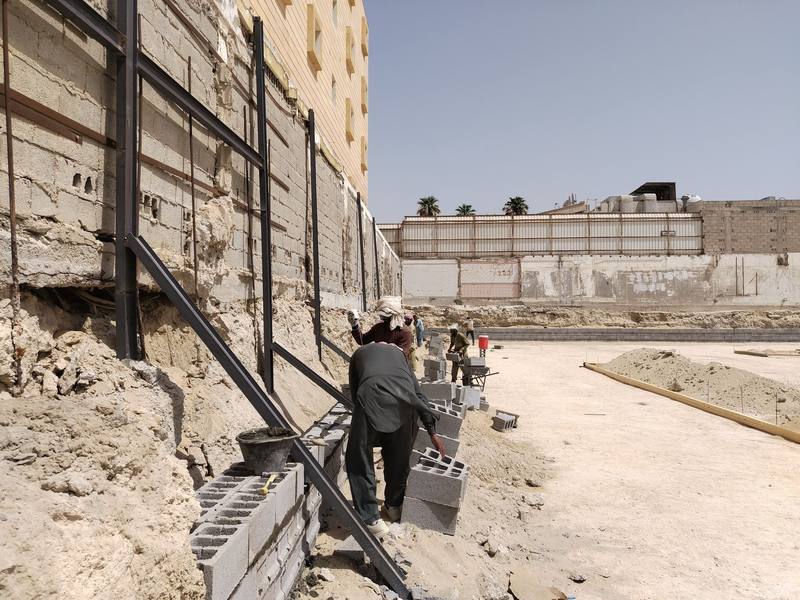
Retaining Wall Installation
New walls engineered for the slope, with drainage and compacted base, in block, stone, timber or concrete.
Learn more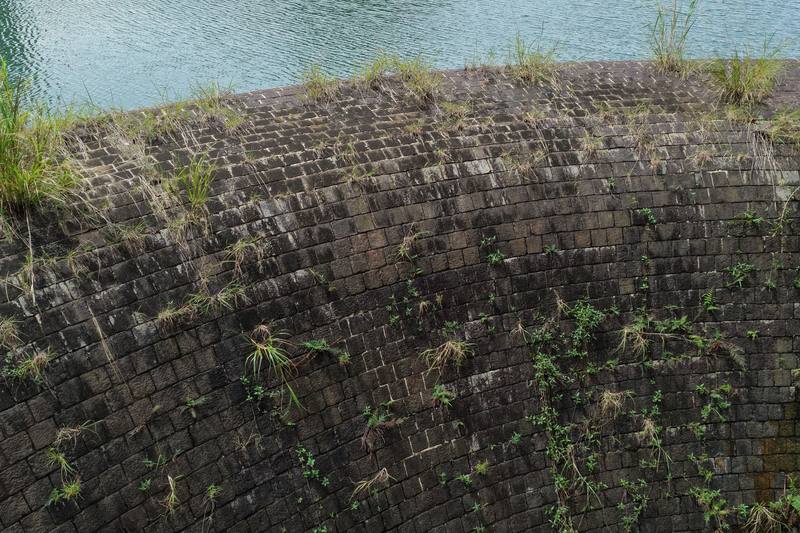
Retaining Wall Repair
Leaning, bulging or cracked walls assessed and rebuilt from the failed section out.
Learn more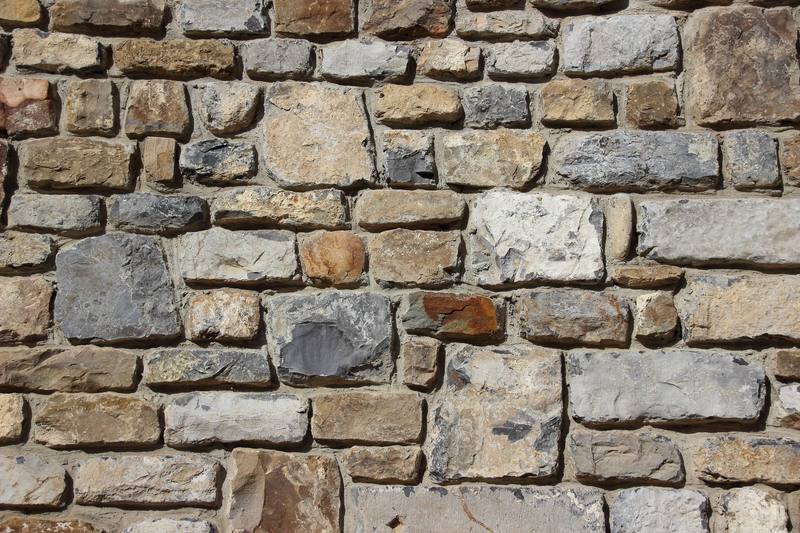
Block Retaining Walls
Segmental concrete block walls with geogrid where the height calls for it.
Learn more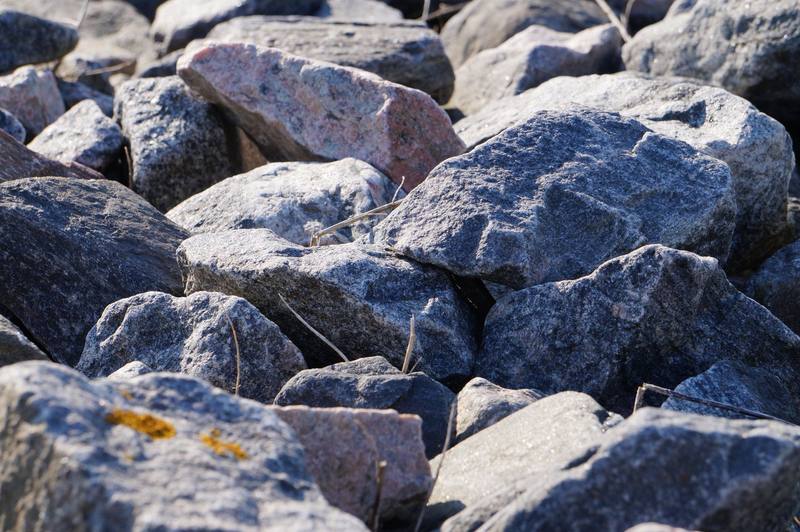
Boulder Retaining Walls
Natural stone set with an excavator for slopes, creek banks and large yards.
Learn more
Timber Retaining Walls
Treated timber walls for gardens and terraces, deadmen tied back into the slope.
Learn more
Concrete Leveling
Sunken slabs, steps and walks lifted back to level instead of replaced.
Learn more
Mudjacking
Slurry pumped under settled concrete to raise it and fill the void beneath.
Learn more
Sidewalk Repair
Trip edges and broken sections lifted, ground or replaced.
Learn more
Emergency Retaining Wall Repair
When a wall starts leaning, cracking or shedding soil after a storm, we come out quickly during business hours and tell you plainly what has to happen first.
Learn more
Get Started
Tell us about your slope or wall
Call us or send a short note with a photo of the area. We will set up a visit, look at the soil and drainage, and give you a written estimate.